
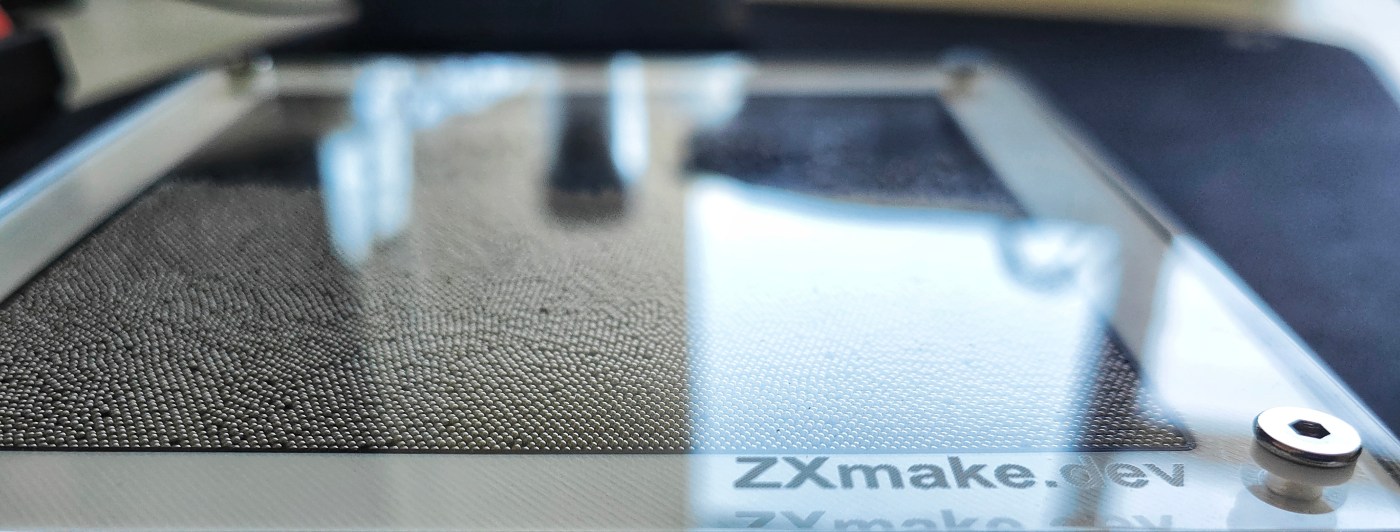
Recently, I was searching for Xmas gifts ideas and came up with a crystallography toy called [Atomix] which use thousands of steel balls to simulate atomic motions. The original toy was created by the French Canadian designer Francois Dallegret back in 1966. After watching the very well explained introduction video covered by Steve Mould [Self organising steel balls explain metal heat treatment], I was quite fascinated that so many complicated materials science concepts can be visualized by such a simple but elegant design. My internal mat-sci nerdiness makes me wanting to have one of this toy so badly. However, after hours of exhaustive googling, it turns out the original toy is no longer in production and the only place sells the replicas is from an overseas private ebay seller with a pretty pricey postage cost. Therefore, I redesign and made an upgrade version of the Atomix crystallography toy myself.
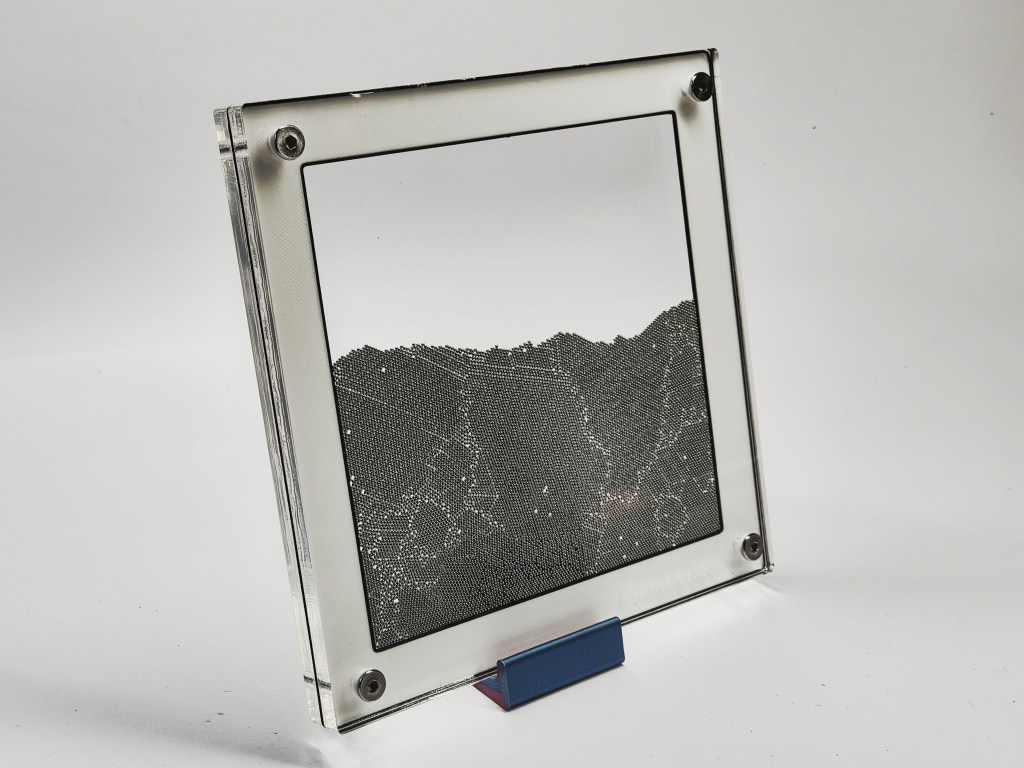
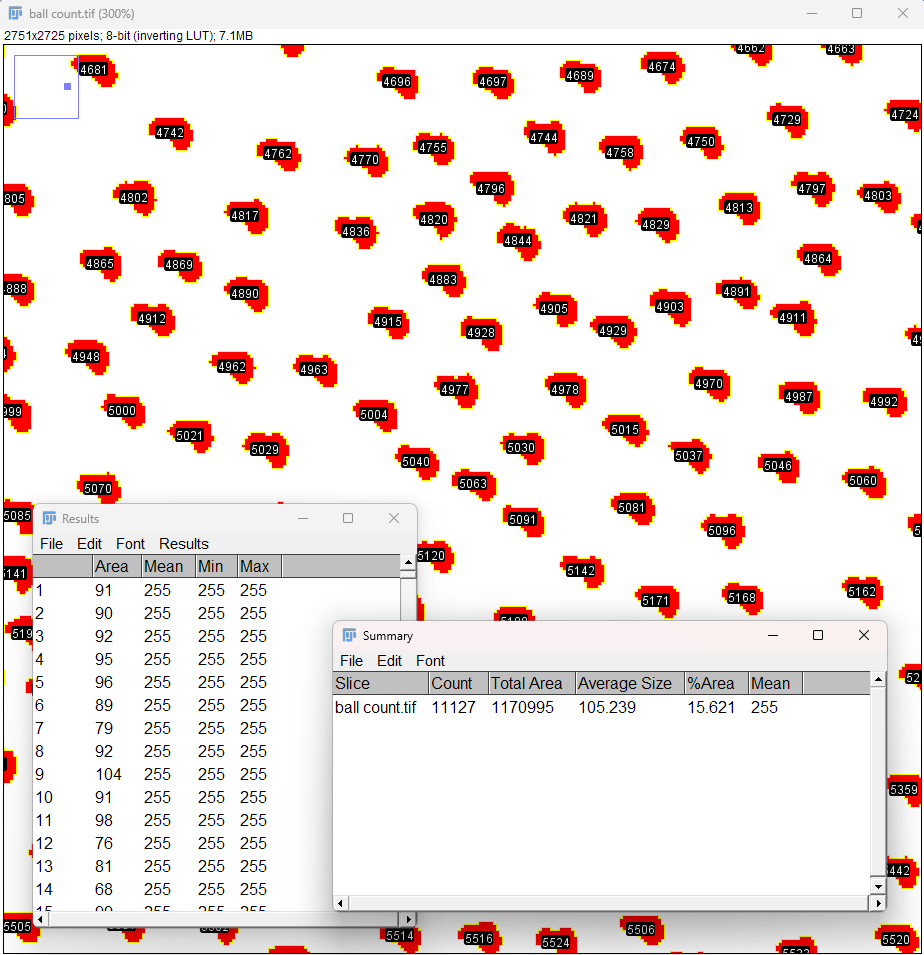
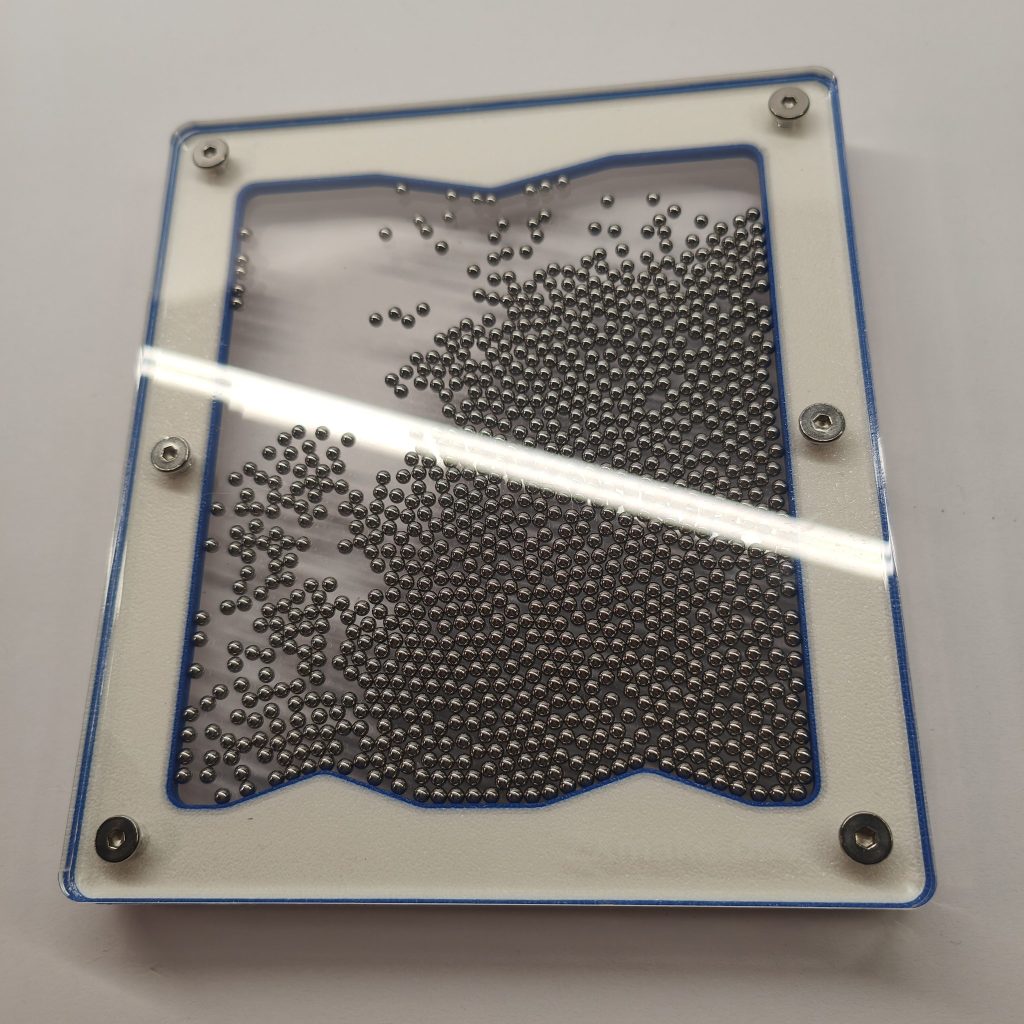
The first prototype was made by laser cuting acrylic panels, 3d printing spacer and sandwiching stainless steel balls (a perfect combination of traditional subtractive and additive manufacturing methods. There is a total of 11127 steel balls (I’ll reveal later how I got this number). Although I’m calling it a prototype, but all the parts assembled together beautifully. After hours of playing with the toy, I found it could be a perfect educational tool for many critical materials science concepts and analytical techniques. So here is a brief summary of what I’ve learnt:
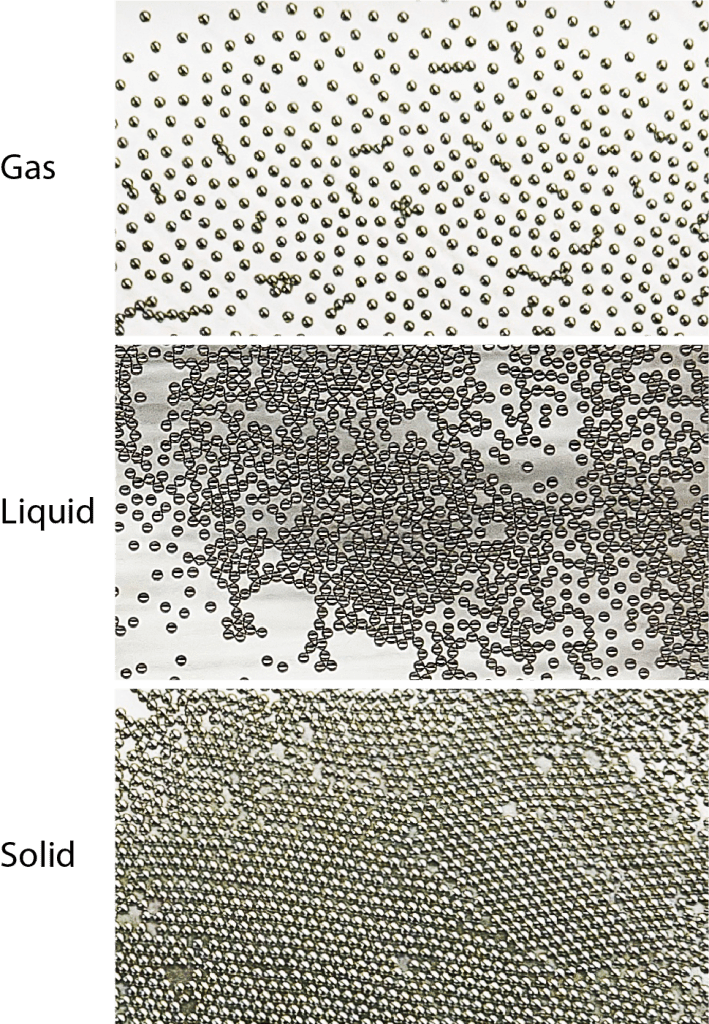
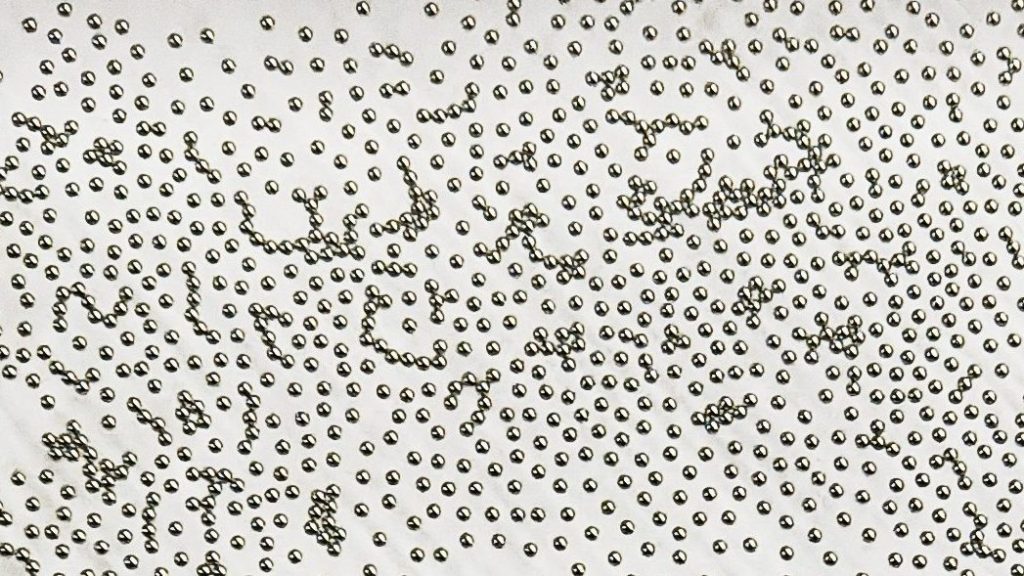
Simulation of different phases of materials
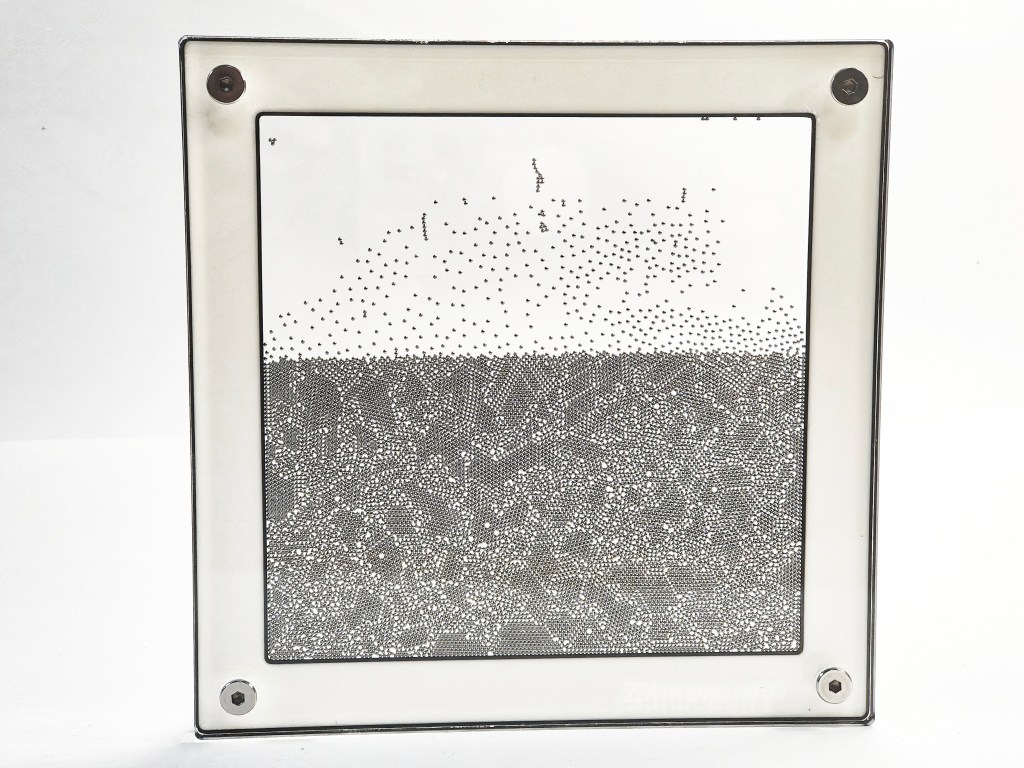
- Quickly shaking Atomix will scramble up the steel balls and spread them into sparsely dispersed “gas” form.
- Slightly tilt the plate of dispersed “gas” will bring the “atoms” more closer to each other under the gravity to form the “liquid” form .
- Tilt the plate straight up will pack the “atoms” more closely into the “solid” form.
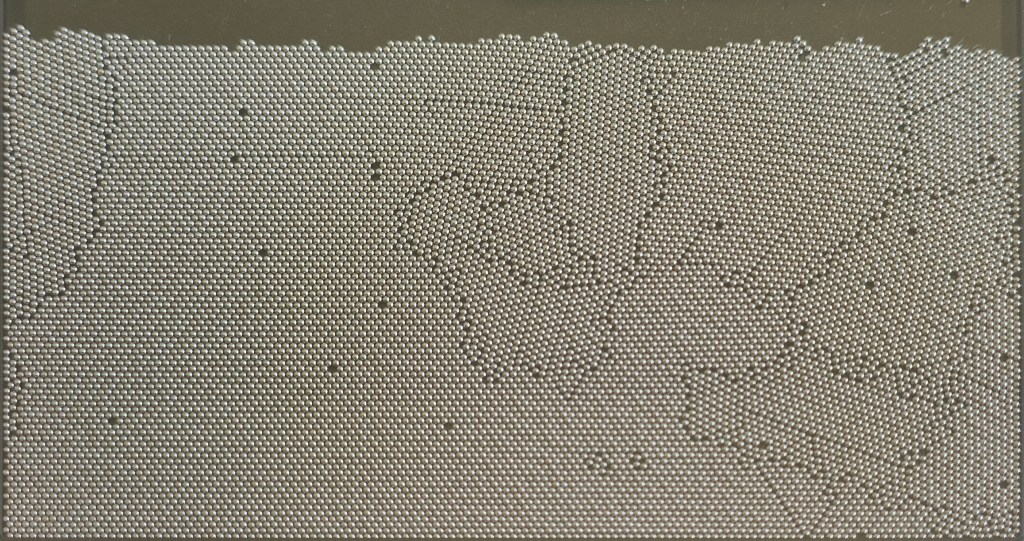
- “Solid” form is composed of small ordered hexagonal close-packing domains that resemble the grain structure in polycrystalline materials.
- Shaking the steels balls (or charging the toy by a plastic rod after rubbed on wool) can generate a lot of static charges to cause the atoms to “evaporate”.
Polymerization in materials
Metallography and recrystallization of metallic materials
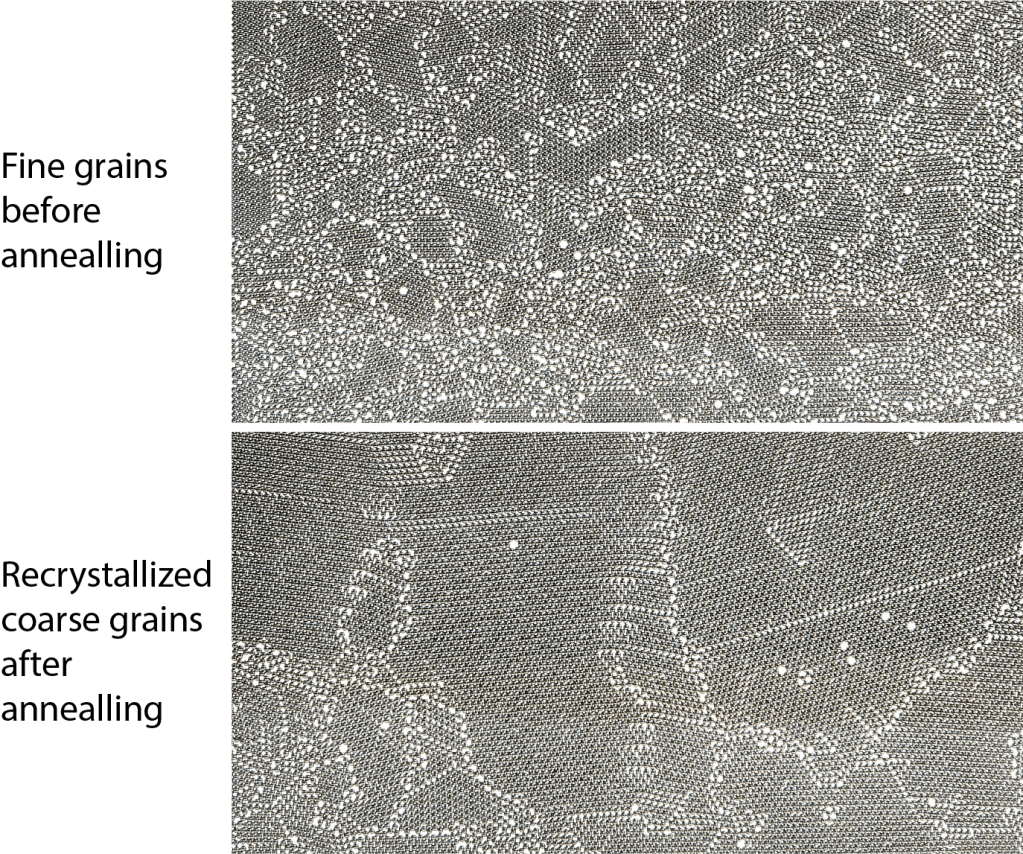
- Shaking and “condensing” the atoms into a fine grain polycrystal “solid”.
- Use a vortex shaker or a massage gun to vibrate the Atomix plate in the up right orientation. The fine grains will “recrystallize” into a coarse grain polycrystal that resembles the process of annealing in metallic materials.
- Grain boundary and various other crystal defects such as vacancies, stacking faults, dislocations are frequently found in the close-packing crystals.
- During vibration, crystal defects can be found moving rapidly within the crystals, which has been demonstrated in Steve Mould’s video.
Particle analysis technique with FIJI-ImageJ
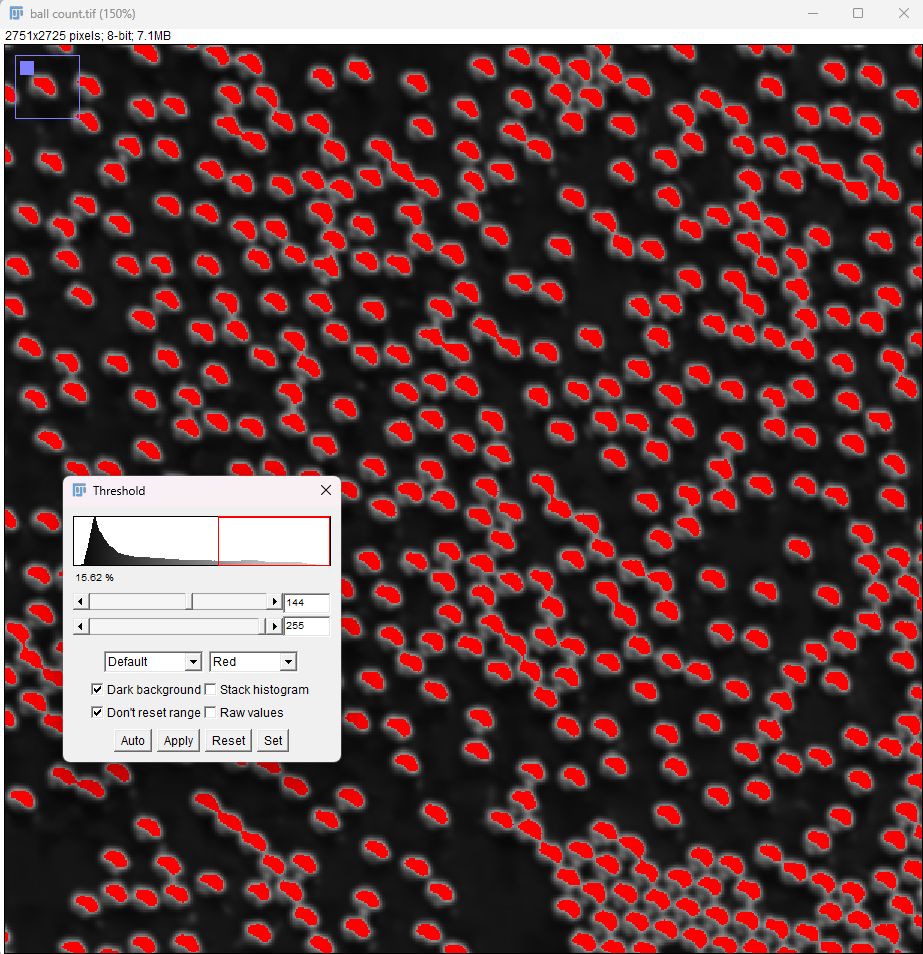
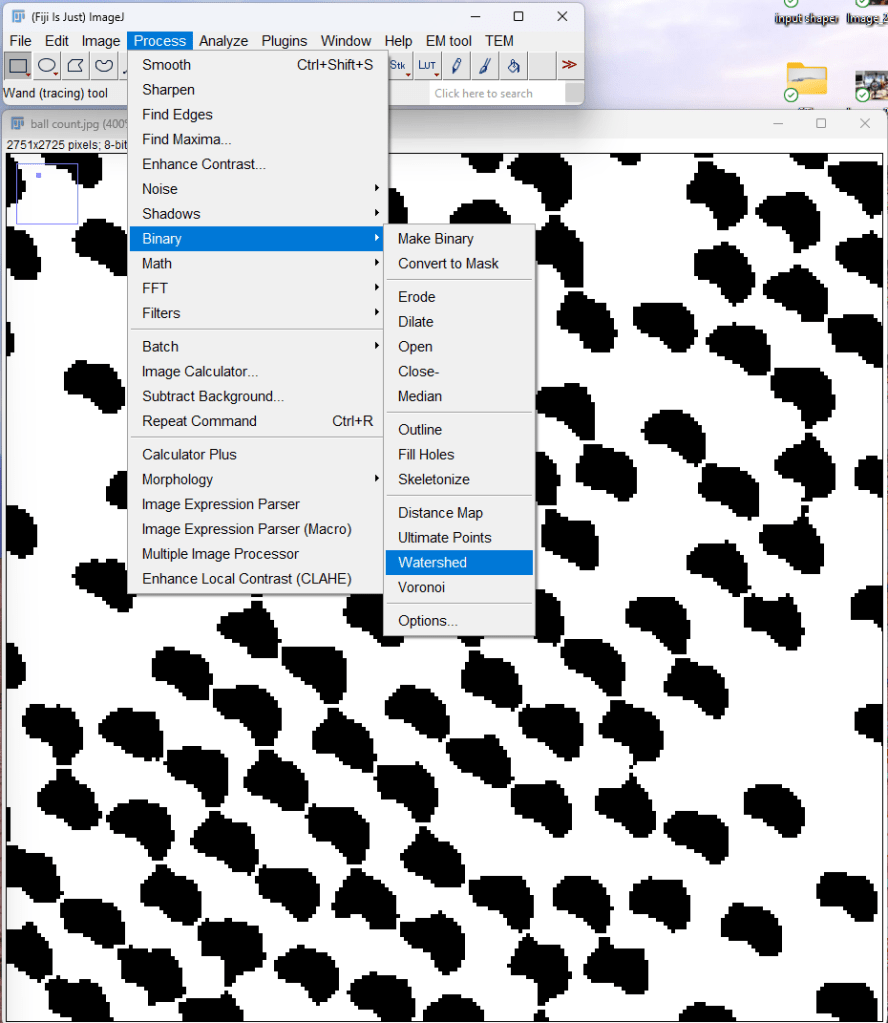
The total number of steel balls can be easily counted by using the open source image analysis tool [FIJI-ImageJ].
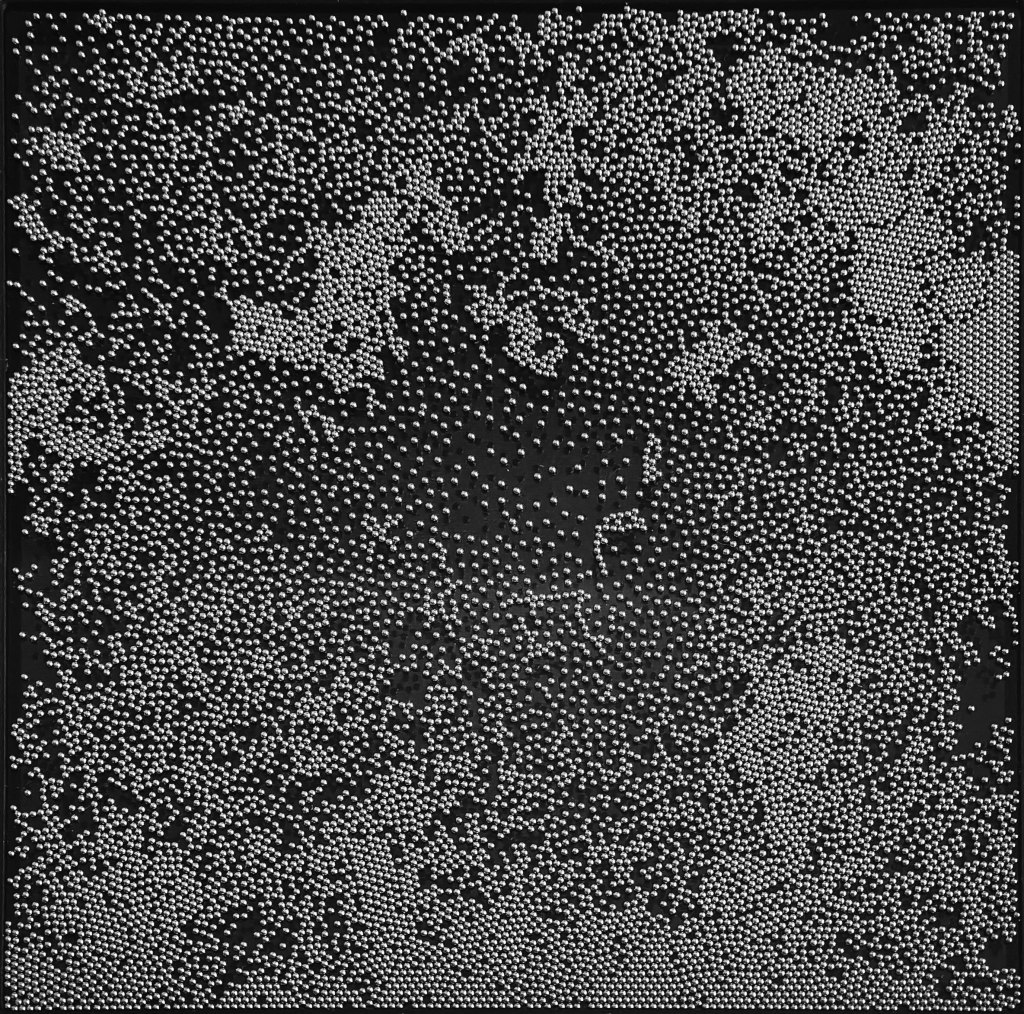
Electron microscopy analysis

And MORE
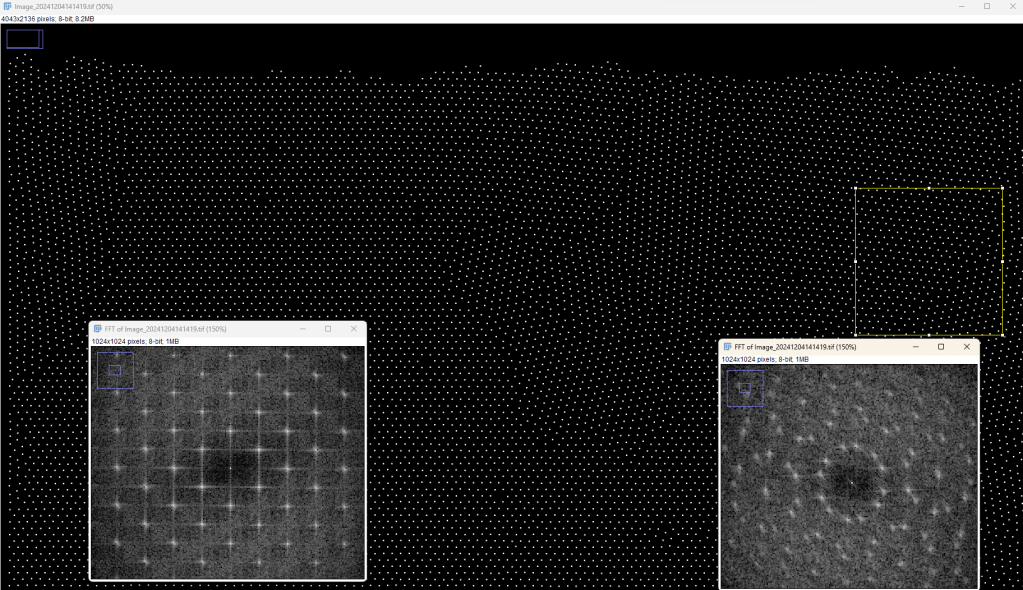
Of course, there are always more ways that the Atomix toy can be integrated with the materials science education and play. For example, it can be used to generate small angle scattering data demonstrated in the video by youtuber [drheaddamage]; or the crystal orientation can be mapped by simulating a virtual probe to generate datasets that are similar to the Electron BackScattered Diffraction (EBSD) or 4 Dimension – Scanning Transmission Electron Microscopy (4D-STEM), etc. If you have any cool idea, please don’t hesitate to post them in the comment below.
In the meantime, I have purchased more than enough raw materials for the build to reduce the postage cost. Therefore, I may have a number of spare Atomix crystallography toys available for sell. If you are interested in getting one, please feel free to check out my ebay and Etsy store.
Hope you enjoy the reading.
Monash Materials Special Edition
This design and make was more like a reflection of my previous study and work in the Monash Materials Engineering Department years ago. Therefore, I also created a Monash Materials Special Edition with the “M” logo!


This is great stuff. As a materials professor I enjoyed the simplicity that bubble raft model can provide, and appreciated it more since becoming an educator! Is it possible to purchase this, I think it will make my teaching in crystalline defects much much more clear. Thanks!
Best regards,
Bo
LikeLike
Hi Bo,
Thank you for your kind comment and your interests in this project. Yes, I still have some materials available for making a few more. I have just setup an Etsy store just so that the purchase can be processed easily and securely.
https://www.etsy.com/au/listing/1843536933/atomix-by-francois-dallegret-remixed
I have also made a list of my other recent designs in the page below which I haven’t got time to post on Etsy. Please feel free to check it out.
https://wordpress.com/page/zxmake.dev/1550
LikeLiked by 1 person